
Wednesday 7th January 2026, 1:52pm
Skiing off-piste can be an exhilarating challenge but it’s not without its risks. Changing weather conditions and a failure to prepare can all turn familiar terrain into a high-risk situation.
Taken from Scottish Mountaineer 104: Words and images by Al Todd, Director, Snowsports Touring
If you’re already a resort skier, you’re halfway to becoming a ski tourer! You now need the winter mountain skills to stay safe: how to use an ice axe, fit crampons, know when to use harscheisen and navigate in poor visibility. You must also understand avalanche awareness and know how to handle an emergency.
Skiing off-piste can be challenging, so spend time practising on the varying uneven snow conditions often found to the side of a piste and learn how to spot rocks lurking just below the surface. There is a lot to learn!
However, if you already have the full range of winter mountain skills and fancy learning how to ski, invest time learning at a ski centre first. Don’t be shy about taking lessons, you’ll pick up key downhill techniques far quicker than you ever would by trying to learn while ski touring. Piste skiing is also fun!
A good level of fitness is key for an enjoyable day out. As with hillwalking, make sure someone knows your plans and, ideally, always ski with others. Also, contribute to any decision-making since the most experienced person in the group won’t always make the right call.
There are a small number of recognised commercial operators and individual guides who specialise in offering ski touring. A winter skills weekend offered by Mountaineering Scotland or an Association of Mountaineering Instructors/British Mountain Guides guide are also ideal for those with downhill skiing experience but little winter mountaineering experience.
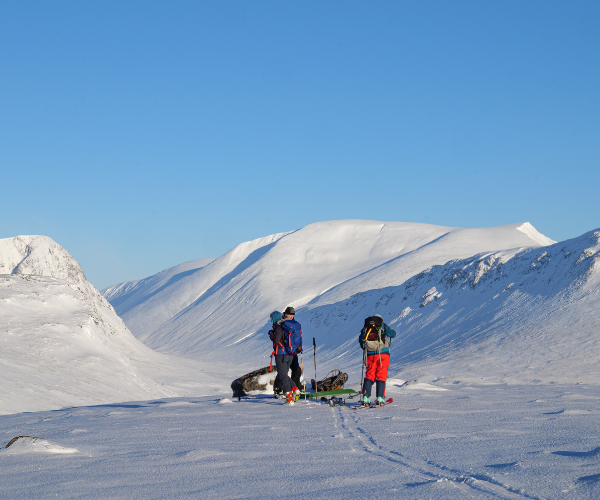
New touring kit can be eye-wateringly expensive. Initially, you may wish to hire or buy second-hand and take advice from a friend who knows what will work for you. Never buy boots online unless you are replacing like for like; properly fitting boots are crucial for enjoyable and controlled skiing. I recommend visiting a bricks and mortar retailer for advice, fitting, boot moulding and often surprisingly good prices. They will also help you to avoid the potentially expensive mistake of purchasing mismatched kit.
In the right conditions, many hills in Scotland can be skied but since our weather varies so much and snowfall can be so localised, it’s vital to be in the know.
Plan well in advance of a day out by watching weather forecasts, reviewing webcams and reading reports from the Scottish Avalanche Information Service. You can pick up helpful information from social media, although take this with a pinch of salt – conditions can change drastically overnight, and everyone’s abilities are different. A great day out for one person might be dangerous and terrifying for another.
Ski touring routes invariably follow the snowier lines in the corries and on lee slopes, so continuously read the snow cover and be prepared to vary your route. Finally, be adventurous. There are often better places to tour than the honeypots of Glenshee and Cairngorm.
When to go
Enjoying Scottish ski touring requires ample reserves of patience and flexibility. Snow can arrive anytime between late October and mid-May – be prepared to head out at short notice (and to carry skis and boots to the snowline). Don’t leave it to next week or the epicness may have melted!
The season can be as long or as short as your enthusiasm, with some of the best days before Christmas. Equally, late April and even May can throw up classic conditions, so don’t put the skis away too soon!
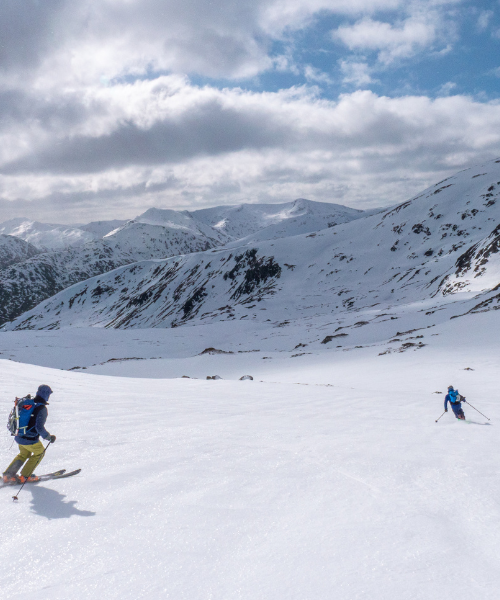
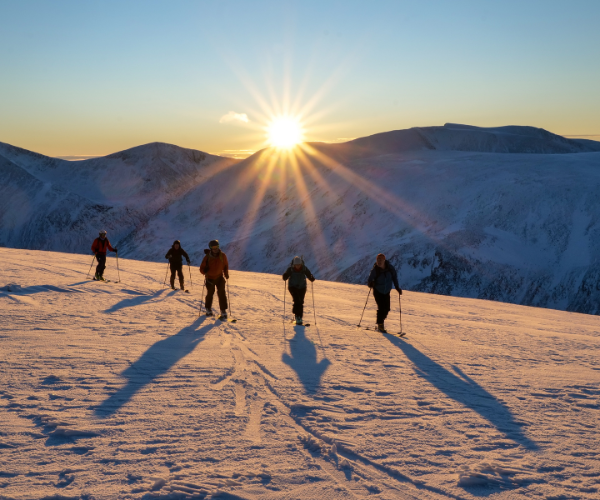
Join your local mountaineering club, since many have a keen subset of ski tourers within their membership.
Alternatively, there are three dedicated ski touring clubs: Eagle Ski Club, Edinburgh Ski Touring Club and Inverness Backcountry Snowsports Club. They all have a winter programme with training days, opportunistic day trips and pre-planned weekend trips, as well as members organising their own days when psyche, knowledge and experience are happily shared.
With ski touring’s growing popularity, occasional tensions have arisen at Scotland’s resorts. Ski centres do welcome tourers and walkers but please respect their operations: follow signed routes, heed ski patrollers’ advice and enjoy their cafés.
If you want an easier day out, consider purchasing a ski tourers ticket that will permit a one-time use of the lifts, as well as an end-of-day descent on the pisted slopes.
Familiarise yourself with Mountaineering Scotland’s Snowsport Touring Code before passing through resort areas. It has been developed in conjunction with the ski centres, Snowsports Scotland and partners.
As recently as the millennium, only a handful of skiers
regularly ventured into the gullies and onto steep face lines. Well-known
routes, including Diagonal Gully, Banana Couloir, Easy Gully and Number Four
Gully, were still primarily known as easy winter climbs rather than ski
descents.
However, today these are almost dismissively seen as trade
ski lines. With the rise of social media, steep skiing is portrayed as cool and
exciting, with the realities of the dangers – alongside the knowledge, skills
and extensive experience required – often overlooked.
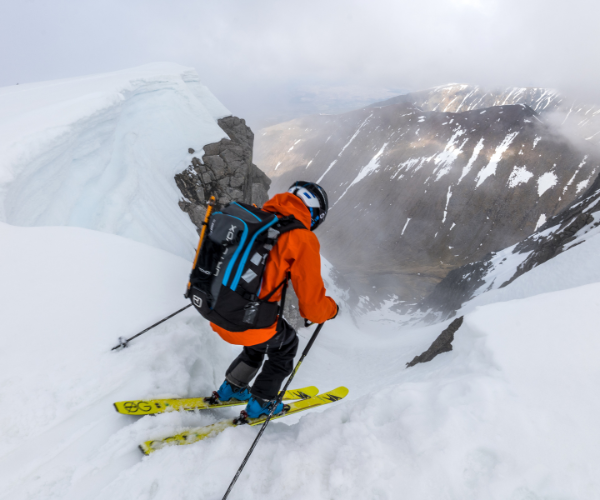
Perhaps unsurprisingly, more accidents are happening – some
involving mountain rescue and others best described as lucky escapes, when a
fall resulted in nothing more than a fright.
A Steep Skiing Safety Guidance has been developed by members
of the Mountain Safety Group for Scotland. If you plan to head to the gullies
this winter, familiarise yourself with the guidance.
There are great publications to inspire your next ski touring adventure and improve your learning. Some of my favourites include:
© 05/1 Mountaineering Scotland
ClimbScotland is a registered trademark of the Mountaineering Council of Scotland Limited
Mountaineering Scotland is a registered trademark of the Mountaineering Council of Scotland Limited


