
Friday 30th January 2026, 3:20pm
Taken from Scottish Mountaineer 104. By Texa Sim, SARDA Scotland Dog Handler.
Dogs can be the ultimate hill companions. Endless energy and enthusiasm, happy in all weathers, and won’t moan about a false summit or two! Summer hill days are often a joy, with heather-covered slopes to frolic on and only a few exposed routes out of reach. Winter, however, is a different beast. It’s important to be prepared in order to keep your furry friend safe and happy on your adventures together.
Winter equals bigger bags and more kit to carry. Just as we need more layers, dogs need additional equipment too, consider carrying:
These items can complement your usual list of hill dog equipment such as extra food, water and paw salve to protect against cracked pads.
Winter also means we humans tend to start using an array of various sharp pointy metal tools. With crampons on boots and ice axe in hand, it’s best for your dog to avoid being by your side in a close heel. Dogs’ claws are their own crampons, and they are usually quite capable in snowy and icy conditions. Do be cautious on steeper slopes and judge your dog’s ability- you know them best.
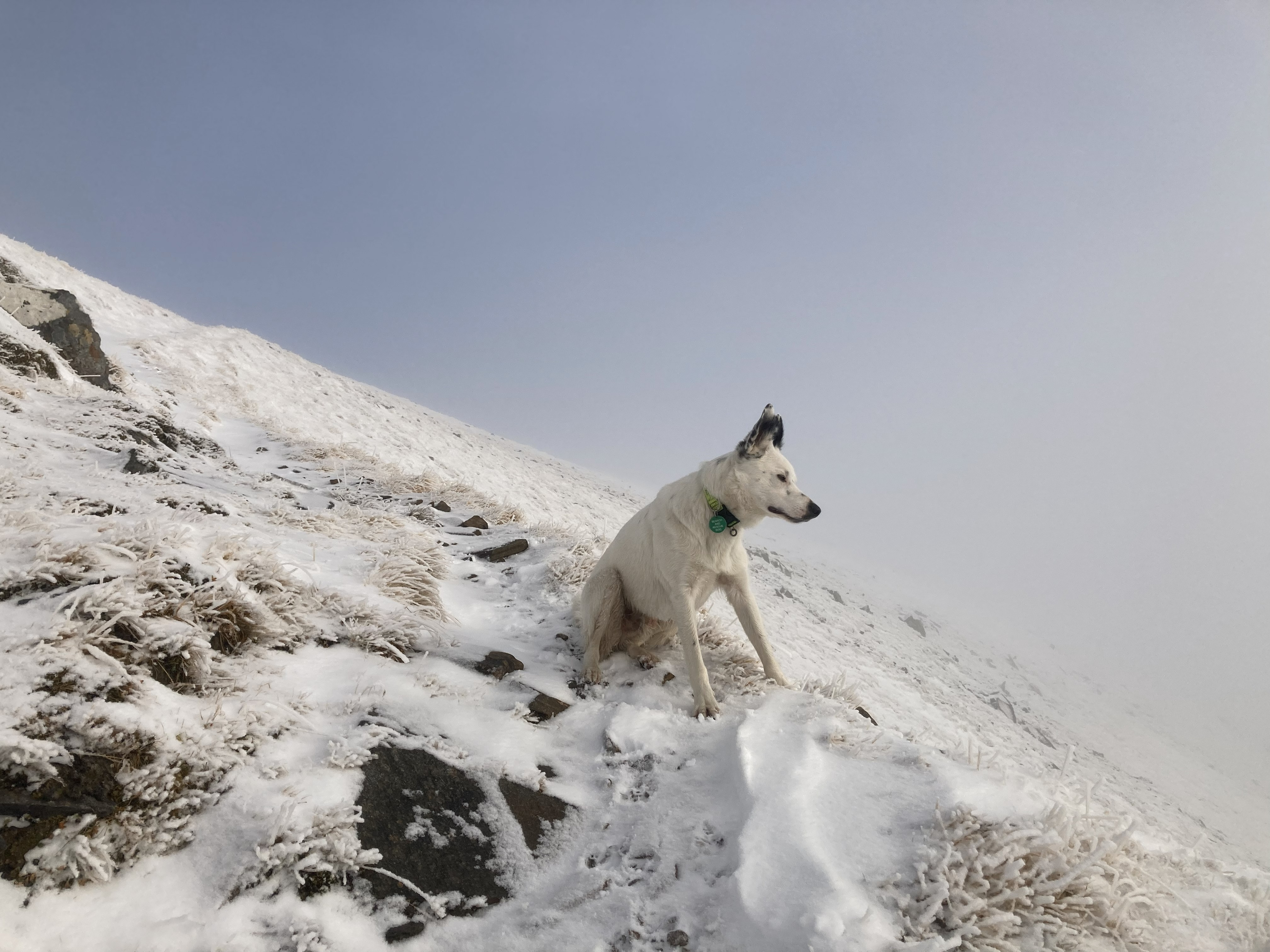
Search dog Mac. Credit: Mark Chadwick
Being well fed before a cold winter’s day is important for you and your dog. Allow at least an hour of digestion time before starting strenuous activities just as working dogs, including search and rescue dogs, do. This helps to avoid the horrendous occurrence of potentially lethal Gastric Dilatation Volvulus (GDV), or stomach torsion.
Another key aspect, and one that may be overlooked, is the question of obedience and training. Important in all seasons, your dog must be able to be recalled in any situation to keep them safe. It’s useful to train a whistle recall that can be heard over greater distances, as well as an arm signal such as your arms held vertically above your head, which can be seen if the wind whisks away your verbal or whistle command.
Winter conditions present extra hazards (think cornices, ice slopes and treacherous terrain) - having good control over your dog is imperative. Many dogs lack a good sense of self preservation, choose your hill expeditions with care and consider building your dogs experience before venturing onto particularly steep or exposed ground. Many hill routes, while perfectly doable by our four-legged friends in summer, are too challenging in winter and good decision making before you step out the front door will allow for a fun and safe outing.
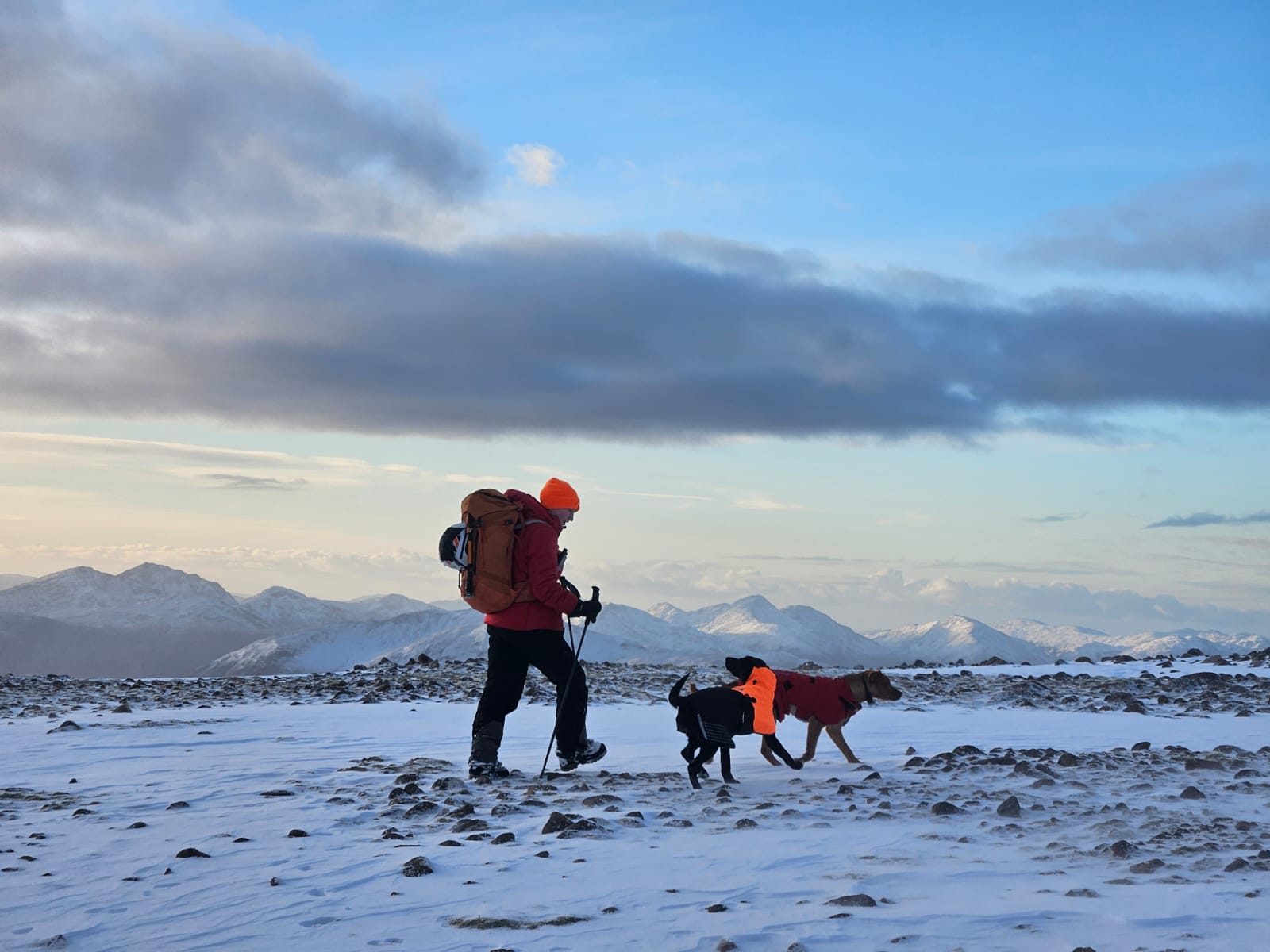
Mullach nan Coirean
Huffing and puffing after an extended period off the hills? Remember your dog is only as fit as you are, so if they are not used to long days, it’s best to build them up before tackling that big traverse on your list. Moving in deep snow is particularly tough and they will expend a lot of energy doing this.
Dogs with longer fur may get snow building up around the belly and legs and between the toes, and you will need to routinely clear this off to ensure they can move freely. Dogs are often very stoic and won’t let on how knackered (or potentially injured) they are until they refuse to take another step. Realistic assessment of your dog’s fitness is part of your general hill planning. Consider as well, that while the mind may be willing, dogs’ pads can suffer on cold and ice-sharp ground, so it is good practice to check them continuously throughout your journey.
While you may not be sharing your Grade 3 winter route with your canine companion in the colder months, there will be many opportunities where you can get out in the snow. If the conditions don’t look quite right for your dog’s abilities, save it for another day and enjoy lower-level adventures. No matter where you go, your dog will just be happy to be by your side.
Search And Rescue Dog Association (SARDA) Scotland is a Scottish charity which trains dogs and their handlers to search for missing persons. SARDA Scotland are part of Scottish Mountain Rescue and the dogs, and their handlers support Mountain Rescue Teams in their search for missing people in the mountains, hills and outdoor spaces of Scotland.
The handlers are all volunteers and can be called upon 24 hours a day, 365 days a year. You can find out more about SARDA Scotland and donate to support their lifesaving work on their website: sarda-scotland.org.
© 05/1 Mountaineering Scotland
ClimbScotland is a registered trademark of the Mountaineering Council of Scotland Limited
Mountaineering Scotland is a registered trademark of the Mountaineering Council of Scotland Limited


